Contact us at
info@fpwnr.org
Friends of Portbury Wharf Nature Reserve


I just had to add a post on this new sighting, admittedly not on the reserve, but I am guessing that’s where they had come from. Not the best picture, but it rather took me by surprise when 5 flamingos flew along the coast from the Salt Marsh towards the Lake Grounds! If anyone plans a walk down that way this morning do let me know if you spot them. Interesting that one of them was a juvenile, probably on passage for the first time since hatching last year. Keep your eye out for these very rare visitors to the UK
Isnt this sunny weather lovely? Well, our early butterflies certainly think so. Walking into town this morning I have spotted three varieties already! First to show is nearly always the brimstone, and that was what I saw first - three of them! Then along came a peacock and last to show itself, on the Spanish Steps, was a red admiral. You can find lots of information on what to look out here butterfly-conservation.org/news-and-blog/species-to-spot-in-march.
butterfly-conservation.org
March 3rd is World Wildlife Day and to mark the occasion we've put together some information about the butterfly and moth species you might see if you venture out this weekend. Brimstone For many, the...
The female Black Redstart is still showing well next to Portishead Marina. It is the size of a Robin and can be easily missed. There are fewer than 100 breeding pairs in the UK, putting it on the Red List of Birds of Conservation Concern. It's also listed as a Schedule 1 species on The Wildlife and Countryside Act.
We have a new Dog Ranger of the Month! Each month one of our Dog Rangers features on our posters that are posted around the Marina and the Reserve. If your canine companion would like to become a Dog Ranger just visit our notice boards and scan the QR code on the poster!
Thank you to everyone who came along to the World Wetlands Day walk on Sunday 1 February. We managed to dodge the showers and most importantly spotted 38 species! See the full list below . . . ![]()
![]() Canada Goose
Canada Goose![]() Little Grebe
Little Grebe![]() Herring gull
Herring gull![]() Blackbird
Blackbird![]() Shelduck
Shelduck![]() Peregrine
Peregrine![]() Wood pigeon
Wood pigeon![]() Robin
Robin![]() Wigeon
Wigeon![]() Moorhen
Moorhen![]() Magpie
Magpie![]() Black redstart
Black redstart![]() Gadwall
Gadwall![]() Oystercatcher
Oystercatcher![]() Crow
Crow![]() Dunnock
Dunnock![]() Teal
Teal![]() Lapwing
Lapwing![]() Blue tit
Blue tit![]() House sparrow
House sparrow![]() Mallard
Mallard![]() Curlew
Curlew![]() Great tit
Great tit![]() Pied wagtail
Pied wagtail![]() Shoveler
Shoveler![]() Redshank
Redshank![]() Long-tailed tit
Long-tailed tit![]() Bullfinch
Bullfinch![]() Tufted duck
Tufted duck![]() Black-headed gull
Black-headed gull![]() Starling
Starling![]() Chaffinch
Chaffinch![]() Pheasant
Pheasant![]() Mediterranean gull
Mediterranean gull![]() Coot
Coot![]() Buzzard
Buzzard![]() Water Rail (heard only)
Water Rail (heard only)![]() Lesser black-backed gull
Lesser black-backed gull
Want to know more about the Wetland on your doorstep? Join the Friends of Portbury Wharf Nature Reserve for a guided walk along the marina, the salt marsh and into the hides. ![]()
![]() There will be knowledgeable guides in the hides to support your bird spotting and lend you the use of binoculars and scopes to see our winter birds up close 👀
There will be knowledgeable guides in the hides to support your bird spotting and lend you the use of binoculars and scopes to see our winter birds up close 👀![]()
![]() DM if you have any questions! 🐦⬛
DM if you have any questions! 🐦⬛![]()
![]() #guidedwalk #britishbirds #birdsuk
#guidedwalk #britishbirds #birdsuk
However quietly you try to open up the shutters in the hides there is always a discernible CLICK. ![]()
![]() I thought I had got away with it but, even though this roe deer was looking the other way, see how his ears are swivelled backwards picking up the metallic sound of the latch engaging. He bounded off soon after taking his two friends with him!
I thought I had got away with it but, even though this roe deer was looking the other way, see how his ears are swivelled backwards picking up the metallic sound of the latch engaging. He bounded off soon after taking his two friends with him!
World Wetlands Day is in February so we are celebrating our very own wetland at Portbury Wharf.![]()
![]() On Sunday 1st February there will be a free guided walk starting at 10.00 am from the sculpture by the Marina Lock Gates.
On Sunday 1st February there will be a free guided walk starting at 10.00 am from the sculpture by the Marina Lock Gates.![]()
![]() If you want to know why wetlands are so vital, look out for the 12 special wetlands squares on the info boards across the nature reserve. We aim to put these up tomorrow and they will stay in place for a couple of weeks.
If you want to know why wetlands are so vital, look out for the 12 special wetlands squares on the info boards across the nature reserve. We aim to put these up tomorrow and they will stay in place for a couple of weeks.
Find out about insects
Insects are very important. It is thought that 90% of all creatures on the planet are insects. So there is plenty to find out about insects.
There are over 24,000 insect species in the UK alone.
On this page there are worksheets to help you sort out the moths from the butterflies and the dragonflies from the damselflies. You can download the worksheets and even take them with you to the reserve and see how many species you can find. There is also a quiz at the bottom of the page to test your insect knowledge.
Worksheets to help you find out about insects
Quiz
Maybe you can answer some of the questions below?
Dinosaurs were around long before insects came along? TRUE or FALSE
What is an insect – ie how many legs does it have, does it have a skeleton?click for answer Insects are invertebrates which means they do not have a back bone. Their skeleton is on the outside of their body and is called an exoskeleton. Insects have:
- a three part body with a head, thorax and abdomen.
- 3 pairs of legs
- compound eyes
- a pair of antennae
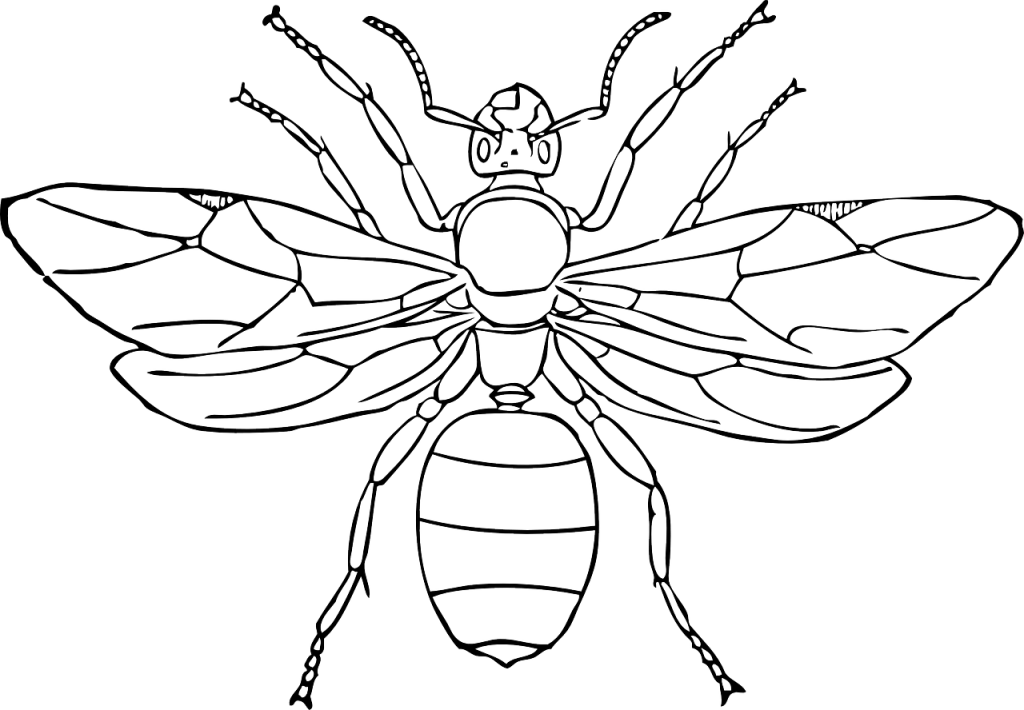
Find out about insects starting with their body
click for answer No a lot of other species as well as insects don’t have a backbone such as: crabs, earthworms, spiders, octopuses, sea anemones,
- Less than 1000?
- About 10,000?
- More than a million?
click for answer More than one million different species of insects have been identified but it is believed there are many more still be discovered. It is thought that 90% of all creatures on the planet are insects. That is a lot of insects! There are over 24,000 insect species in the UK alone. See how many different insects you can count on your next visit to the nature reserve.
click for answer Yes, most do but not all. Examples of wingless insects are silverfish, fleas and ants (but not flying ants of course).
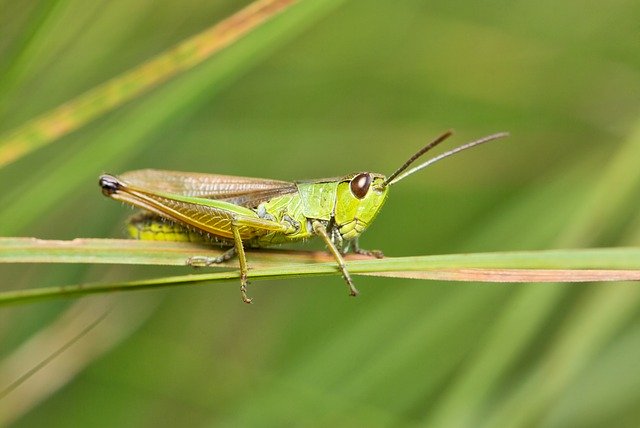
click for answer Grasshoppers use their strong back legs to catapult themselves into the air. But most also have wings and are strong flyers reaching about 8 miles per hour. Locusts are grasshoppers and they are well know for swarming in huge flocks.
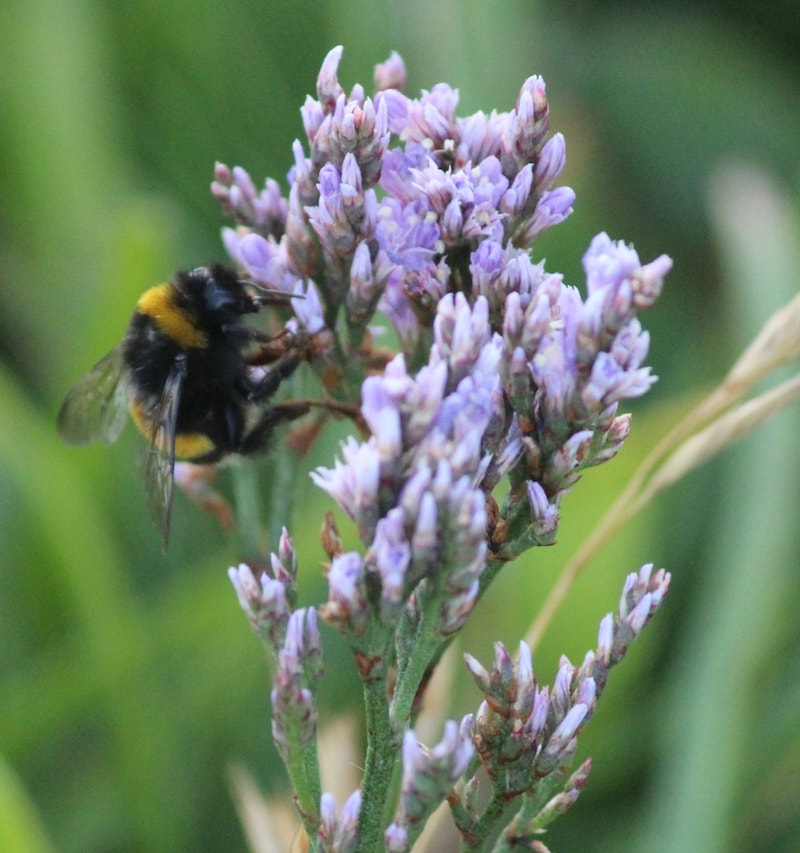
click for answer A bee has 4 wings (2 pairs) of transparent wings. In fact all winged insects except for flies (Diptera) ie house flies, horse flies and mosquitoes have 4 wings.
- https://kids.kiddle.co/Moth
- https://www.thoughtco.com/fascinating-facts-about-moths-1968179
click for answer FALSE there are nine times more moths than butterflies. Scientists have already identified 135,000 species of moths and there are still more out there to discover.
Are all invertebrates insects?
How many species of insects are there?
Do insects have wings?
Do grasshoppers have wings?
Did you know grasshoppers can jump vertically to a distance of 10 times their length and horizontally to 20 times their length. So a 5 cm grasshopper can jump one metre. . . see more interesting facts at http://justfunfacts.com/interesting-facts-about-grasshoppers/
How many wings does a bee have?
Do you know how many times an insect flaps its wings? Well they are all so different. The slowest is probably the butterfly with 5 – 10 wing beats per second while the midge is said to flap its wings over 1000 times per second!
There are many more butterflies than moths. True or false?
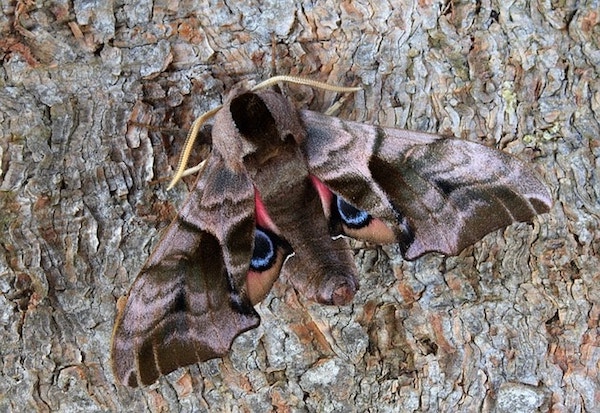
This is a well camouflaged Hawkmoth . . . see fascinating moth facts at:
The Woodland Trust has a great insect page where you can find out about insects